
Did you see this coming? Because I didn’t! I put off writing this Reading the Alphabet installment because I just couldn’t work up the enthusiasm for any of my potential “C” books. And then I looked at my list, looked at the calendar, and realized… well, it must be fate, right? Or at the very least, an opportunity I couldn’t pass up.
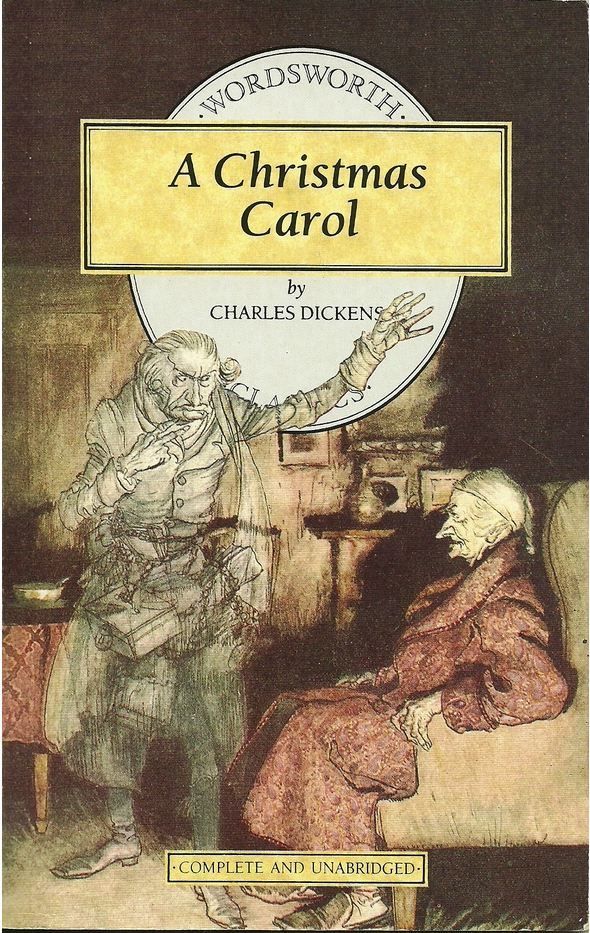
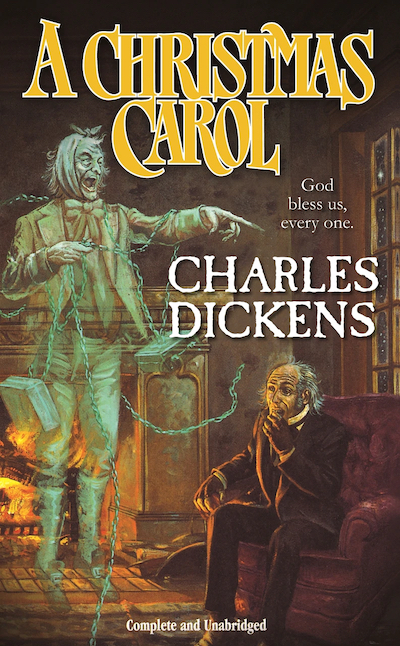
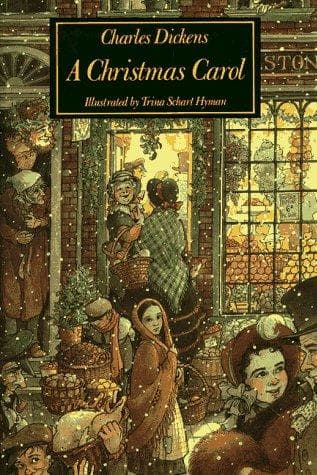
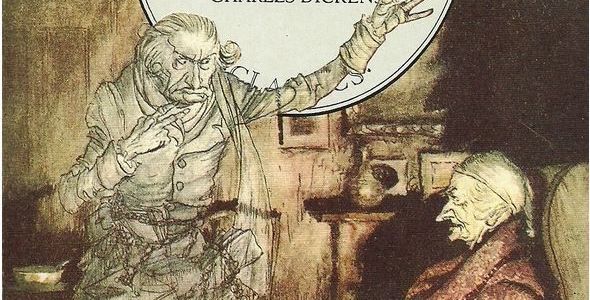
A Christmas Carol by Charles Dickens is one of my favorite books – not just for the story itself but for the humor and compassion with which it is told. From the opening paragraph, with its darkly humorous reflection on the relative deadness of door knobs vs. coffin nails, to the final words, the book is wry and earnest and hopeful all in one. Little moments, like Scrooge’s morbid fascination with whether or not Marley’s ghost is capable of sitting down, make me laugh even when I’m not reading it. And the overall message of goodness and second chances is one we should carry in our hearts throughout the year.
But the thing that always catches my attention with every re-read is how quickly Scrooge repents and regrets the loss of friends and family. Which tells me two things. One: Scrooge, in the beginning is a sad, lonely man, who has forgotten what true warmth feels like. We’re told “[h]e carried his own temperature with him always… [n]o warmth could warm, no wintry weather chill him. No wind blew that was bitterer than he, no falling snow was more intent upon its purpose, no pelting rain less open to entreaty.” That’s a pretty bleak existence, isn’t? No friendship, no kindness – and not even the ability to accept it from others who would share it with him, such as his relentlessly friendly nephew. After decades spent living that way, being forced to remember all that he’d lost (his fiancée, his beloved sister, his friends – the possibility of his own warm circle of familial love) must be startling to even the coldest heart.
But lest you think I’m being too easy on the miserly Scrooge, the second thing his speedy repentance tells me is that Marley and those three ghost of Christmases past, present, and future? They must be truly terrifying, both in their spectral power and in the scenes they put before him. And this is where the book’s opening, which goes on and on to make sure we know that Marley. Is. Dead. is important not just as a humorous introduction but as set-up for the shock of Marley’s ghostly appearance. Because, in Dickens’ own words, “If we were not perfectly convinced that Hamlet’s Father died before the play began, there would be nothing more remarkable in his taking a stroll at night, in an easterly wind, upon his own ramparts, than there would be in any other middle-aged gentleman rashly turning out after dark in a breezy spot – say Saint Paul’s Churchyard for instance – literally to astonish his son’s weak mind.” Talk about your wake-up calls – one day you’re counting your money, turning away do-gooders with an unfeeling crack about reducing the “surplus population,” and then come night – ghosts and more ghosts, promising a dire afterlife of walking the world with the chains forged in life and showing you not just the things you already missed but the horror of the future if you don’t start changing now.
It would be easy to attribute Scrooge’s sudden Christmas Day transformation to one ghost-filled night, the shock of which will inevitably fade. But he promised the spirits he would change, and from the very beginning, Dickens has established, at the same time as he established Marley’s dead state, that Scrooge signed the register of burial, “and Scrooge’s name was good upon ‘Change, for anything he chose to put his hand to.” Then, as now, Scrooge’s word is reliable, and his reformation more than a passing fancy.
“Scrooge was better than his word. He did it all, and infinitely more; and to Tiny Tim, who did not die, he was a second father. He became as good a friend, as good a master, and as good a man, as the good old city knew, or any other good old city, town, or borough, in the good old world…. He had no further intercourse with Spirits, but lived upon the Total Abstinence Principle, ever afterwards; and it was always said of him, that he knew how to keep Christmas well, if any man alive possessed the knowledge. May that be truly said of us, and of all of us!” –A Christmas Carol
I read once that there are no do-overs in life – only second chances. And isn’t that the truth? Like Scrooge, we can regret the past, but we can’t change it. But we can live today – and tomorrow – better, with more kindness and compassion.
As we approach the new year, dear Readers, I hope you and yours are well and safe and that the future will be better than the past. 2020 is on its way out, and while we can’t always change our circumstances, we can do our best to make the lives around us better for our presence, with friendship and love. I know I wouldn’t have made it through this year without the support of my loved ones, near and far. “And so, as Tiny Tim observed, God bless Us, Every One!”
–b

 Book It With Becca
One thought on “Reading the Alphabet: C is for A Christmas Carol”