Well, the vacation is over, and it’s back to work! A few things blew up in my absence, and coworkers, as ever, are out to make my job harder, but the good news is, I still have my books! Truly, disappearing into a good book and forgetting the rest of the world, even for a little while, is such a relief. This week, a lot of my reading ended up being about survival – man against nature, man against man, woman against a killer AI, etc.. That wasn’t intentional, and I certainly hope it wasn’t my subconscious telling me something, but it was entertaining, especially since the books also covered a good variety of genre. And I did warn you things would get murder-y again after that romantic binge, didn’t I? Yes, here at Book It With Becca, we like to cover the extremes.
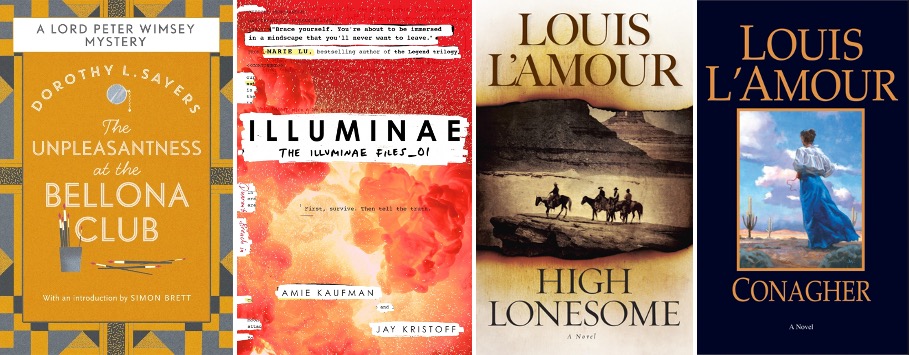
The Unpleasantness at the Bellona Club (“Lord Peter Wimsey” #4) by Dorothy L. Sayers: I think this may be my favorite yet. The murder has lots of twists and turns, the characters are at odds with themselves and each others (including our good friends Wimsey and Parker), and it’s just a good time. Also, well done, Dorothy Sayers – you managed to avoid the racism for once! Yay? I know the next book, Strong Poison, introduces Harriet Vane, so I’m very much looking forward to that.
Illuminae (“The Illuminae Files_01”) by Amie Kaufman and Jay Kristoff: This is a reread for me, and with the anxiety of the first time out of the way, I was able to appreciate the details a little better (no, seriously – pretty sure I spent 75% of that first time biting my nails and screaming in horror at my friend who recommended it, ha). The pacing is great, the characters are fun, and it’s an epistolary series, too, so you know I’m onboard for that. Also, if anyone wants a well-produced audiobook, look no further. The voice actors, sound effects, and mixing are A+.
A quick introduction for these next two books: When I worked at my hometown library, I spend a lot of time re-shelving Westerns for the old farmers who came in. We had one narrow bookshelf for the whole genre, which may not seem like much until you remember that these were slim trade paperbacks. (Western writers, like their heroes, are often men of few words – a point in their favor, if you ask me.) Anyway, all that time re-shelving and vainly attempting to maintain some sort of order naturally aroused my interest, and I checked out several myself. Lately, I’ve been revisiting some John Wayne films and started wondering how I’d feel revisiting Western genre authors, too, so I picked out a couple of Louis L’Amour titles and dived in. Obviously, it’s a difficult genre (both onscreen and on-page), and I may get into those aspects more fully in a later, dedicated post, because I do think it’s something we should talk about seriously and not just dismiss. But for now, here are my thoughts on the two books I read this week.
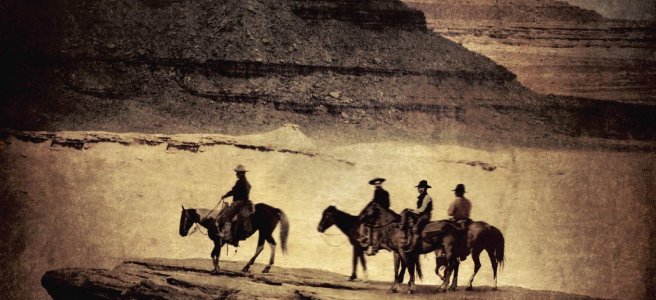
High Lonesome by Louis L’Amour: I think this book is a good example of how good writing and problematic content can exist in the same story. L’Amour is one of the greats for a reason – he has a firm grasp of narrative and pace, weaving his story tighter and tighter until the action-packed ending, and his descriptions evoke the brutal beauty of the country without getting too carried away. But the racism and sexism are discomfiting, to say the least. It’s of a sort that seems to think it’s enlightened but really just plays into those old ideas of the “noble savage” (and the simple “savage,” as well, in a lot of ways) and the weaker woman who needs protecting (even when she’s as good with a gun as any of the men!). There is an interesting subplot about an aging outlaw who is trying to learn how to be a good father to his grown daughter, but ultimately, it resolves with him passing her to another man. And the daughter herself is a rather uncomfortable read, as her thoughts all center around men (her father and her love interest), as well.
Conagher by Louis L’Amour: Similar to the above, but I enjoyed this one much more. While High Lonesome takes place on a condensed timeline and asks the reader to get invested in the characters very quickly (and the characters to get invested in each other even faster), Conagher, while just as short, stretches out over a longer period of time. The characters have more the depth, and the female lead, in particular, is an improvement. She’s smart and tough… but still falls prey to some of L’Amours romanticizing about women. I really wish there had been more of her in the final act of the story, but I enjoyed spending time with Conagher, too. There is, apparently, an adaptation with Sam Elliott and Katharine Ross, which, I’m sorry, I have to watch it.
What have you been reading this week? Are you revisiting old favorites or taking chances on new stories?
–b

 Book It With Becca